
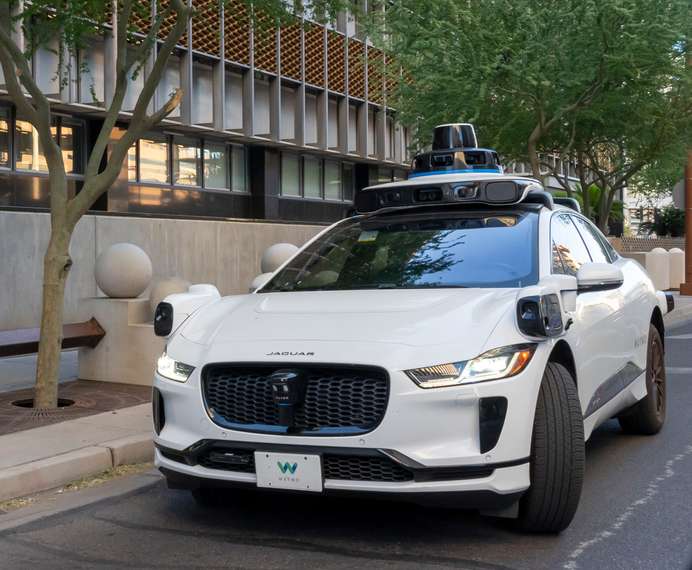
Travel policies have evolved alongside every major shift in business travel from online booking tools to rideshare services with autonomous vehicles poised to become the next evolution.
While many travel programs have yet to incorporate autonomous transportation into their formal policies, commercial deployment is accelerating rapidly. What makes this shift critical for travel managers is not just the underlying driverless technology, but the policy, liability, and visibility gaps it introduces into managed travel programs.
Today, commercial autonomous ride-hailing services are no longer future concepts, they operate daily across major U.S. metropolitan hubs, completing hundreds of thousands of paid trips each week.
- Waymo maintains an operational presence across over a dozen U.S. metropolitan areas, traveler accessibility varies significantly by market maturity. Travel managers should recognize that “market presence” does not always guarantee instant vehicle availability for visiting employees.
- Open Commercial Access: Fully accessible to any rider via the app in mature markets like Phoenix, San Francisco, Los Angeles, Miami, and Orlando.
- Phased / Waitlist Deployment: Actively scaling access in growing hubs, including Austin, Atlanta, Dallas, Houston, and San Antonio.
- More than 500,000 paid autonomous rides are now completed each week, a tenfold increase from approximately 50,000 weekly rides in 2024.
- Waymo’s goal is to exceed one million autonomous rides per week by the end of 2026, reflecting how quickly deployment is accelerating.
Risk and Security Checklist
As you begin to evaluate the inclusion of autonomous vehicles into your travel policy, we have developed a Risk and Security Checklist to guide your internal stakeholder review:
1. Operational Safety & Incident Response
- Emergency Pull-Over Protocols: Does the provider have remote assistance centers capable of safely taking control or guiding the vehicle to a safe pull-over location during system errors, severe weather, or road blockages?
- In-Vehicle Emergency Support: Is there a dedicated, single-touch emergency assistance button inside the cabin connecting passengers directly to live safety agents?
- First Responder Integration: Has the AV provider established formal response protocols and training with local police, fire, and EMS in operating markets?
- Vehicle Maintenance Standards: Are hardware systems (LiDAR, cameras, sensors, tires, braking) subjected to mandatory daily inspections and automated diagnostic monitoring?
2. Duty of Care & Traveler Tracking Data
- 24/7 Crisis Contact Capability: Can corporate security reach the AV provider’s operations center 24/7 to locate or check on an employee during a localized disaster, civil unrest, or active security event?
- Geofencing & Route Boundaries: Are operational boundary limits clearly defined and flagged if an employee attempts a trip outside vetted service zones or during late-night hours?
- Real-Time GPS Location Data: Does the provider’s enterprise API integrate directly into the company’s Travel Risk Management (TRM) platform (e.g., International SOS, Everbridge, Crisis24) to track traveler location in real time?
3. Commercial Liability & Legal Risk
- Primary Commercial Insurance: Does the provider carry primary commercial liability insurance covering passenger injury and property damage, explicitly releasing the rider’s employer from vicarious liability?
- Regulatory & Compliance Standing: Is the provider fully licensed for commercial rider-only (driverless) operations by state and local transportation authorities (e.g., CPUC/DMV in California, ADOT in Arizona)?
- Passenger Terms of Service: Do the provider’s enterprise terms allow corporate travel coverage without waiving standard corporate legal protections or indemnity rights?
4. Cybersecurity & Physical Cabin Safety
- Cybersecurity Framework: Does the provider maintain ISO/SAE 21434 (Road vehicles/Cybersecurity engineering) compliance to protect vehicle systems against remote hijacking or data breaches?
- Cabin Security & Privacy Controls:
- Are internal cabin cameras active, and how is video data stored, accessed, and purged?
- Can riders control door locks from inside the cabin at all times?
- Passenger Identification & Access: Does the vehicle unlock exclusively via the authorized employee’s corporate app profile or NFC pairing to prevent unauthorized cabin access?
5. Service Reliability & Operational Continuity
- Severe Weather Operations: Does the provider automatically suspend or limit service during heavy rain, fog, extreme heat, or dust storms, and are rerouting backups provided?
- Peak Capacity & Airport Access: Does the provider offer guaranteed or prioritized dispatch at high-density corporate hubs (e.g., major airport pickup lanes, downtown office campuses)?
- Accessibility (ADA) Compliance: Does the provider fleet include wheelchair-accessible vehicles (WAVs) or accommodation features for travelers with visual or auditory impairments?
The Bottom Line
The rapid acceleration of commercial autonomous ride-hailing marks a pivotal shift in corporate travel management. While the potential for cost savings and traveler satisfaction is clear, maintaining duty of care and risk mitigation must remain paramount. Using a structured evaluation framework empowers organizations to establish strong governance today, ensuring driverless transportation integrates seamlessly, and safely, into their broader travel ecosystem.